California · North Weekly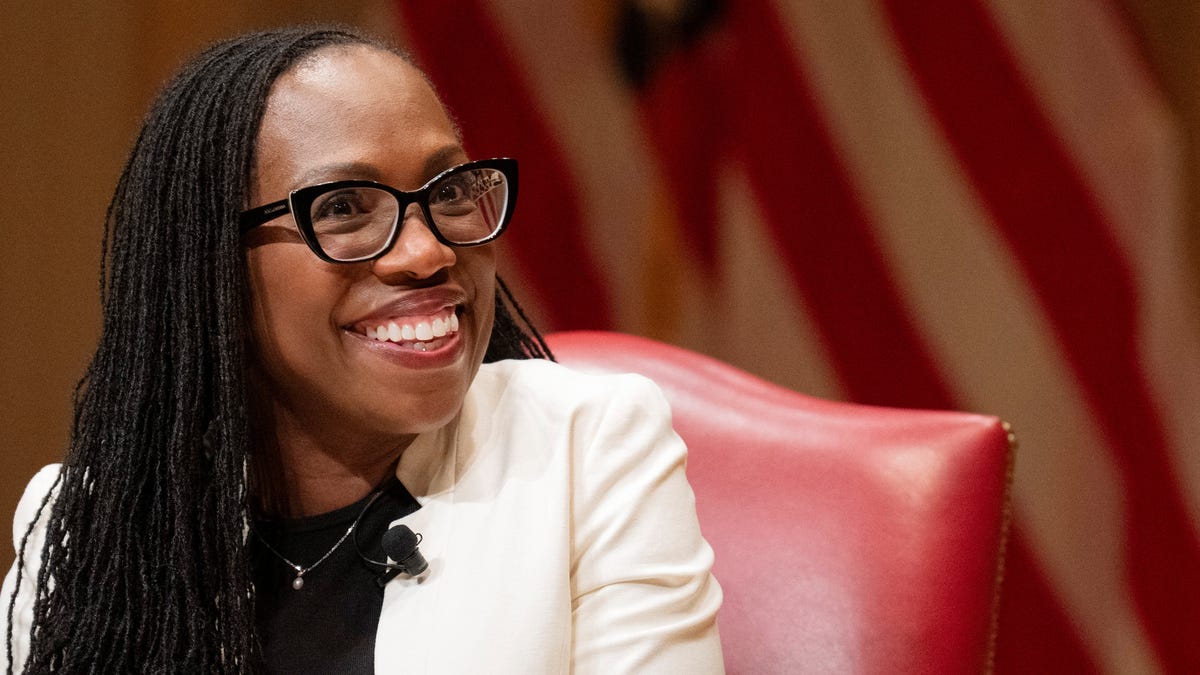
Jackson, one of the court's three liberals, said the justices used to wait for `actual emergencies' before intervening. Show Caption WASHINGTON − Supreme Court Justice Ketanji Brown Jackson continued her ongoing criticism of how her colleagues are handling emergency appeals, telling an audience on Sept. 24 that requests for immediate intervention can’t become a “special avenue that certain privileged litigants can use selectively.” “As one of my colleagues recently suggested in an opinion,” Jackson said during remarks at the University of the District of Columbia law school, “some frequent emergency docket filers have the court on speed dial.” Although Jackson never mentioned the Trump administration, she was referring to Justice Sonia Sotomayor’s dissent last year when the conservative court backed the administration in a dispute with a federal judge over the administration’s attempt to deport eight migrants to South Sudan. In her own opinions, Jackson − one of the three liberal justices − has complained that the court is showing preferential treatment for the government, along with a willingness to undercut lower court judges.
She did so last year when the court allowed the administration to block $783 million in grants for health research. “This is Calvinball jurisprudence with a twist,” Jackson wrote , referring to a made-up game in the comic strip Calvin and Hobbes. “Calvinball has only one rule: There are no fixed rules.
We seem to have two: that one, and this Administration always wins.” The rulings she referenced came on emergency requests from the administration to let a controversial policy move forward while it’s being challenged in court. When major policies of President Donald Trump have come before the justices for a final ruling, the court permanently shut down his attempts to use emergency powers to impose tariffs and to rewrite citizenship rules . But a majority has more often than not sided with the president on the interim decisions about Trump’s policies that are decided without a full record or oral arguments.
Jackson said the Supreme Court didn’t use to get involved as often in the early stages of the litigation. Instead, the justices “waited humbly until the facts were established and the lower courts had fully and fairly assessed the law.” “It was only in exigent circumstances, actual emergencies, that the justices felt the need to intervene in pending cases,” she said. “I think the justices understood that very little good comes from taking an institution that is supposed to be operating outside of the political realm and routinely steering it into the fray.” But in recent years, Jackson said, the court “has been noticeably less restrained, especially with respect to pending cases that involve controversial matters.” In those cases, Jackson said, anyone seeking the court’s early help should have to show that something harmful is about to happen “in the real world” without intervention.
If they can do that, then the justices should issue a ruling based on which side will experience the greater harm. “We have an appellate review process with an equitable emergency exception that can sometimes warrant the Supreme Court’s early intervention, but only when exigent circumstances require it,” she said. “I feel strongly that we should be sticking to that history and tradition.” Facebook Twitter Email
Source: USA Today